Aeration in WWTPs: How Predictive Control is Reshaping Daily Operations
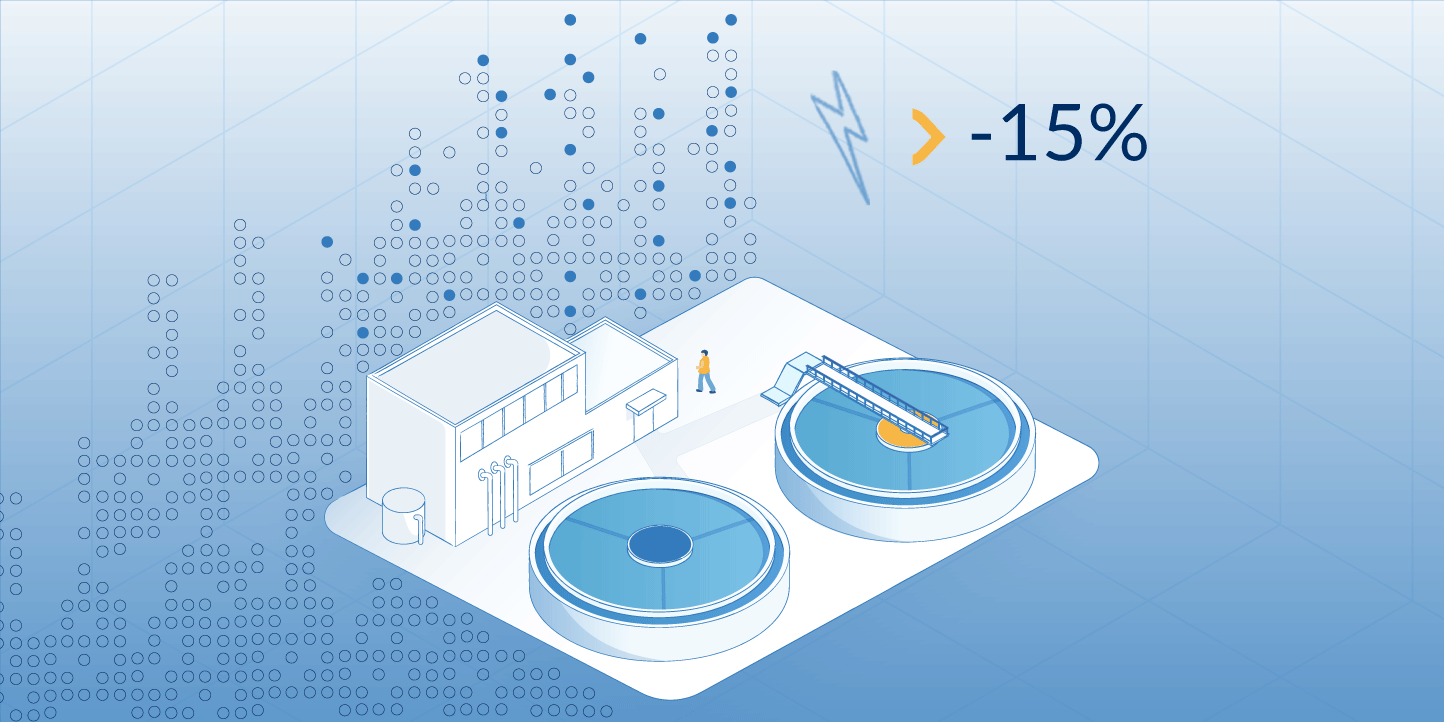
Aeration is the beating heart of a wastewater treatment plant. It is also its most energy-intensive process, accounting for up to 60% of a plant's total electricity consumption. For decades, the operation of our basins has relied on a simple and robust logic. But today, the context surrounding these facilities has changed radically.
Energy prices are no longer just rising; they are fluctuating. These sharp market variations make operating budgets increasingly complex to forecast and control.
At the same time, the new Urban Wastewater Treatment Directive (UWWTD) is raising the stakes.
Added to this are increasingly variable weather conditions. Intense rainfall, periods of drought, and significant temperature swings: these uncertainties cause sudden fluctuations in incoming flow and the load to be treated, while also impacting the biological activity of the basin. All these variations make maintaining stable operations even more challenging.
A wastewater treatment plant is no longer just expected to treat water; the challenge has become global: ensuring increasingly precise nutrient removal while aiming for carbon neutrality and tightening budgets in a changing environment
Faced with this equation, it is possible to evolve methods to reconcile treatment performance, cost control, and carbon efficiency, without having to rethink the entire infrastructure.
Biological treatment: why traditional aeration control is a heavy burden
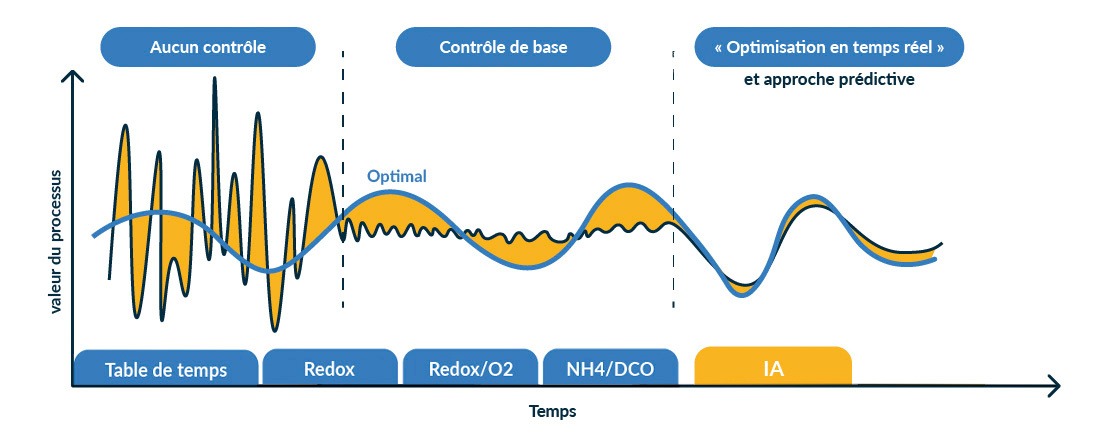
Today, the control of a biological basin relies mainly on sensors—dissolved oxygen or redox, depending on the site—which operate blowers based on the measured state of the basin at a given moment. This operation was designed to ensure discharge compliance, and it fulfills this mission very well.
Its limitation comes down to one word: it operates "reactively." However, biological treatment has its own inertia. Regardless of the sensor used, the measurement reflects the current state of the basin, never its future evolution. By the time a deviation is detected, the organic or nitrogen load is already present. The controller therefore reacts to an event that is past or ongoing, with an inevitable time lag.
To compensate for this inertia and eliminate any risk of non-compliance, the logical precaution is to build in safety margins. We over-aerate preventively, "just in case." In other words, we accept running equipment more than necessary to guarantee discharge quality.
This safety comes at a price. It drives up the electricity bill and accelerates the mechanical wear of aerators. It also weighs on teams: faced with sudden variations, this control system sometimes struggles to keep up, generating nuisance alarms and requiring numerous manual interventions. Operations thus reach their limits, financially, materially, and humanly
Artificial intelligence in wastewater treatment: moving to predictive control
What if, instead of being subject to the biological inertia of the basin, we gave the controllers a head start? That is the whole point of artificial intelligence applied to water treatment: enabling the transition from reactive regulation to predictive control.
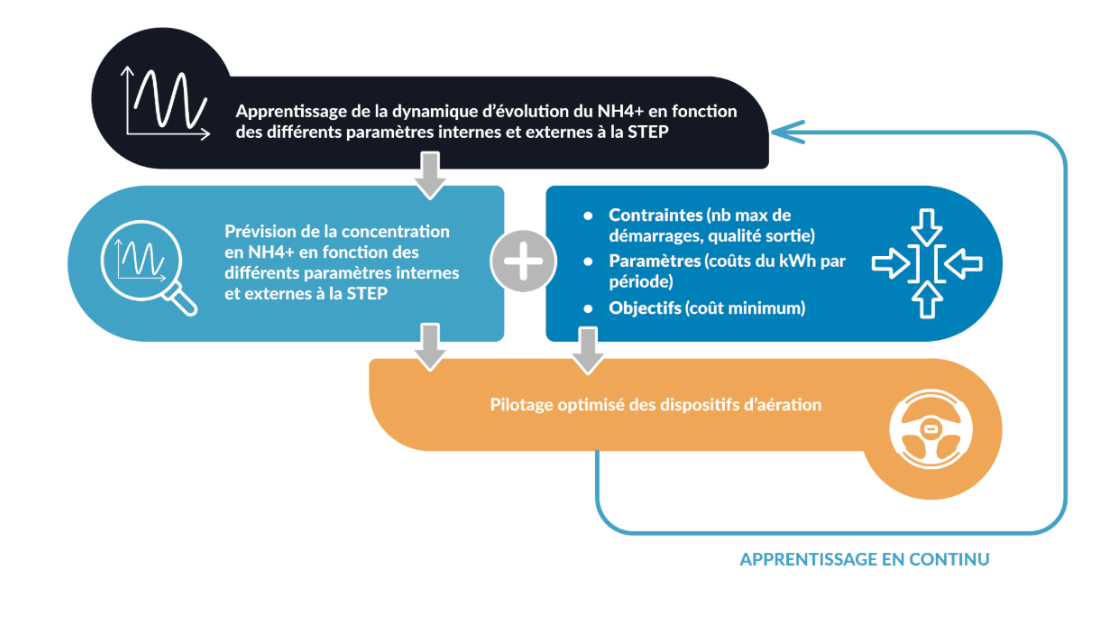
The advantage of the AI technology developed by Purecontrol is that it does not require replacing existing equipment or adding new sensors. The principle is much more pragmatic: leveraging data already available on-site to model the biological behavior of the aeration tank. Even better, the technology allows for anticipation, calculating the best possible operating scenario, and sending instructions to the PLCs.
In practical terms, the solution is based on four main pillars:
- A "virtual sensor." The algorithm continuously cross-references data from existing sensors (inflow rates, RedOx, standard O2 probes, equipment operating status). Based on these measurements, it reconstructs the actual ammonium (NH4) load without the need for additional physical hardware.
- 24-hour anticipation. The AI does more than just read the present. It learns from the plant's specific behavior to predict how this pollutant load will evolve over the next 24 hours.
- Integration of external factors. This biological prediction is then put into perspective with external constraints: weather forecasts, energy price fluctuations, and the carbon intensity of the power grid.
- Real-time instruction sending to PLCs. This is the decisive link in the system: the tool doesn't just predict; it directly transmits optimized instructions to the PLCs that control aeration.
By cross-referencing all these parameters, the tool constantly determines the most relevant aeration strategy. When predictive regulation is active, it dynamically adjusts aeration setpoints : blower cycles and oxygen demand to provide exactly the amount of oxygen needed, at the most opportune moment.
“Purecontrol makes our agents' work easier, saves them time, and provides better control over operations. This translates into energy savings, optimized management of chemical inputs, and increased discharge stability.” - Boris Gueguen, Sanitation Director, Rennes Métropole
A more stable biological treatment process
In the field, switching to predictive control is a game-changer for teams. The tool fades into the background to become a true co-pilot: it absorbs data complexity to bring peace of mind back to operations.
By anticipating load variations instead of reacting to them, the control system smooths out basin operations and makes treatment more reliable. This is a direct asset for meeting discharge standards. Rather than correcting a drift once pollution is already present in the basin, aeration is adjusted upstream to absorb ammonium and organic load spikes before they affect the quality of the effluent. The surges that usually pose a risk of non-compliance are dampened, and compliance is maintained with more consistent margins, without systematically resorting to over-aeration. This is all the more strategic as the UWWTD tightens thresholds on discharge standards.
These performance levels are accompanied by a true interactive control tower, via an online hypervision platform. It offers total visibility: examine past basin data while clearly visualizing upcoming predictive control strategies. The tool centralizes daily operations; operators can enter their own field readings, track custom indicators, and generate automatic reports to create operational summaries.
“As soon as Purecontrol detects a fault in the treatment system, I automatically receive an SMS on my work phone. I can then focus solely on pollution measurement readings. It saves me time in my daily work and ensures that the water treated at the plant outlet is of very high quality.” Thomas Jeancler, Sanitation Technician, Veolia (Grand Besançon Métropole)
Better energy management and a more flexible plant
The second major benefit of predictive control is energy-related. This is also where the plant can go the furthest, even becoming a player in the electrical system.
First lever: consumption.
Instead of reacting in an emergency, the system smooths the operation of air blowers and adjusts aeration to exactly what is needed, keeping equipment at its optimal operating point (for example, by regulating variable speed drives). You aerate exactly as much as necessary, without preventive over-aeration, which reduces consumption and limits mechanical wear on aerators.
Second lever: cost.
With its 24-hour outlook, the tool intelligently shifts aeration cycles to times when electricity is cheapest by targeting off-peak hours or taking advantage of favorable spot prices. The impact is direct: we see an average of 15% savings on aeration energy costs without ever compromising purification performance.
“The solution anticipates aeration needs based on rainfall, plant inflow rates... This allows us to shift operating windows to minimize the duration and cost of aeration. We have successfully optimized the site's overall consumption by 10 to 15%.” Mathieu Raymond, Director of the Dordogne Water Authority (RDE 24)
The third lever is the carbon footprint.
This energy management transforms the plant's environmental footprint, with CO2 emission reductions of up to 40%. By strategically shifting its consumption, the wastewater treatment plant simply uses less carbon-intensive electricity.
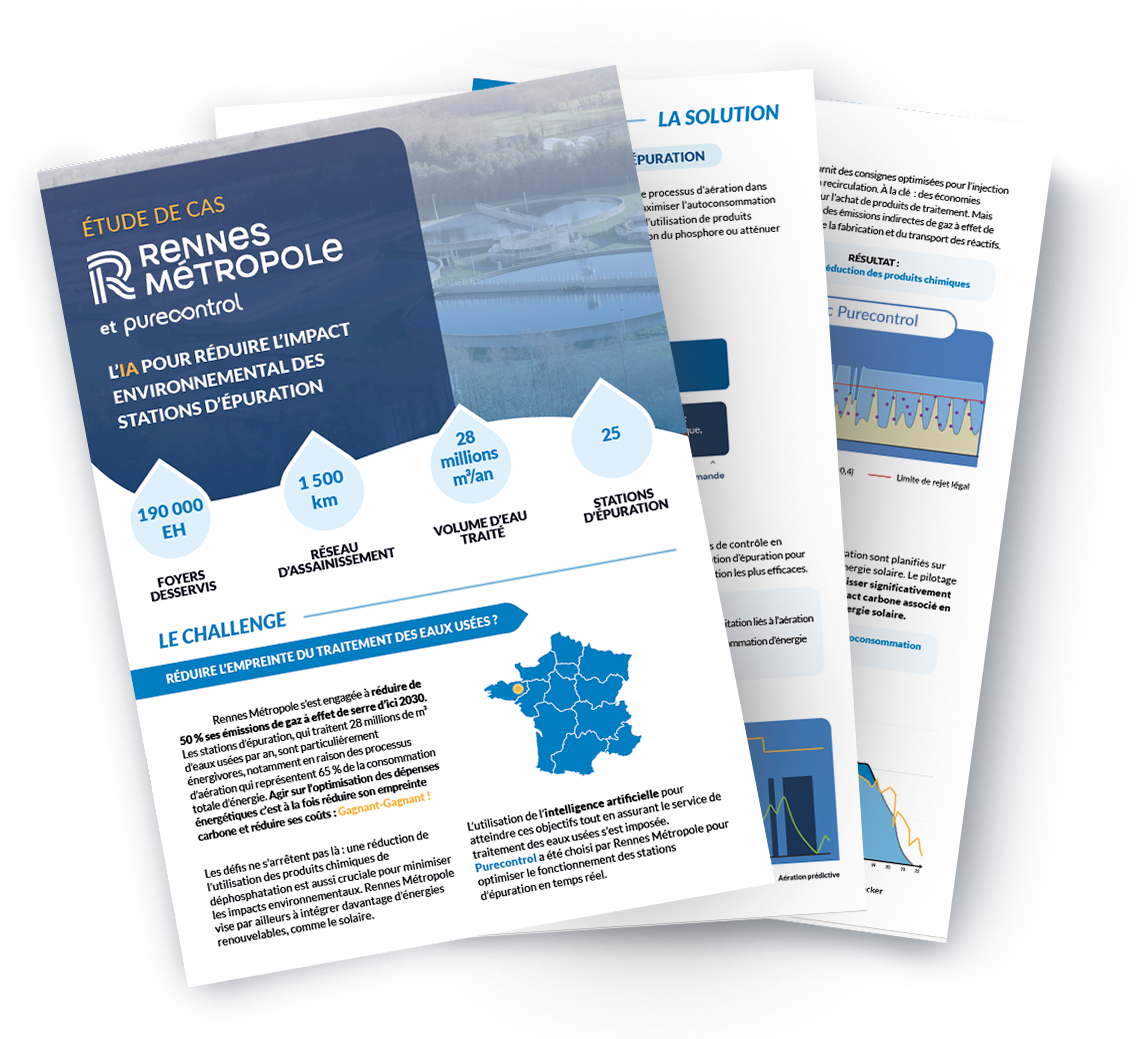
Read the Rennes Métropole case study:
Predictive control does more than just optimize the plant itself: it gives it a new role, that of a full-fledged player in the energy system. The plant can thus participate in demand response mechanisms: it temporarily modulates its power to relieve the national grid. This generates additional revenue without any disruption to water treatment services. And if the facility has solar panels, the tool naturally synchronizes aeration needs with local solar production peaks.
Want to see how this works in the field?
Discover how real operations teams have integrated these tools into their daily work: explore our webinar replays dedicated to wastewater treatment plant performance.